Restoring some semblance of dignity
My paintings over the past three years are meant to restore some semblance of dignity and respect for the brutal deaths that many have experienced or witnessed in Palestine. Despite the painting process being an avenue for processing the trauma of the unrelenting onslaught, I am weary of these paintings being seen as a romanticization of the horrifying circumstances. Representing and memorializing others is emotionally difficult, especially when the victims cannot speak for themselves. These paintings are a by-product of my will to document the ongoing ethnic cleansing and its effects, and to transmute the terrible devastation that I’ve witnessed through the videos and photos shared by people in Gaza.
It was not intentional, but a common theme developed in my works of “the subaltern [the oppressed] staring back [at their oppressor].” This quote is a play on Gayatri Spivak’s essay, “Can the Subaltern Speak?” and Friedrich Nietzsche’s “if you gaze for long into an abyss, the abyss also gazes into you.” Spivak, an anti-colonial theorist and literary critic, confronts the limited access to power that the oppressed (the subaltern) have within colonial and capitalist hegemonic structures, and more specifically, asks whether it is possible for said groups to speak lasting change into effect. As for Nietzsche’s quote, while interpretations vary, I use it to convey the reality that as Israelis conduct surveillance on Palestinians, they stare into an abyss of racist hatred and a false sense of superiority that will one day consume them too. Their monitoring will never tell the truth.
These expressions of defiance against the erasure of Palestinians stand as a reminder …
These expressions of defiance against the erasure of Palestinians stand as a reminder that representations of Palestinians do not have to internalize the occupying forces’ monitoring, dehumanization and objectification of them.
They/we look back, or even talk back (as in the title of the painting, Take off your shoes for this land is doused with our blood).
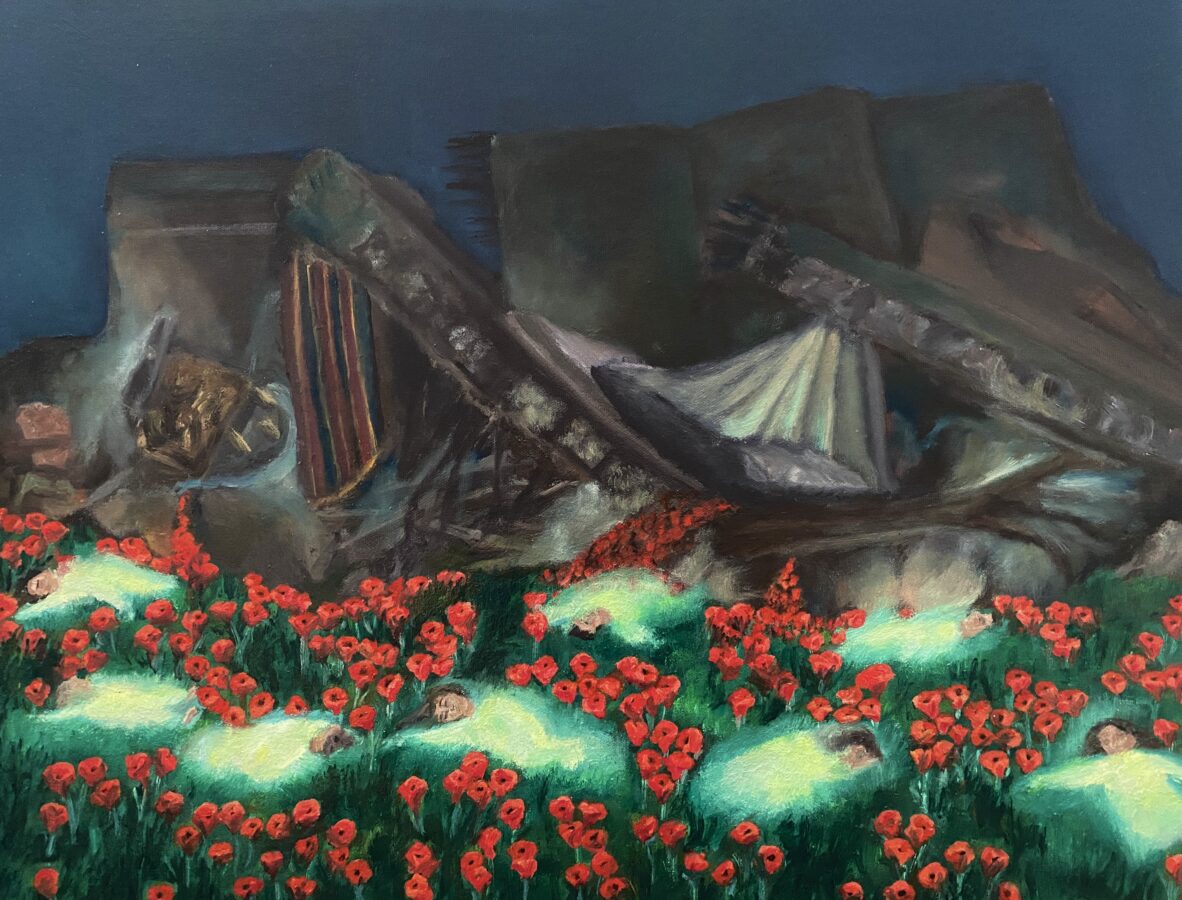
This piece is dedicated to the tens of thousands of martyred children, some of whom were buried under the rubble of their homes. Of the children who survive, there is an abbreviation used by medics in Gaza—WCNSF, for Wounded Child, No Surviving Family—because of how common this circumstance is.
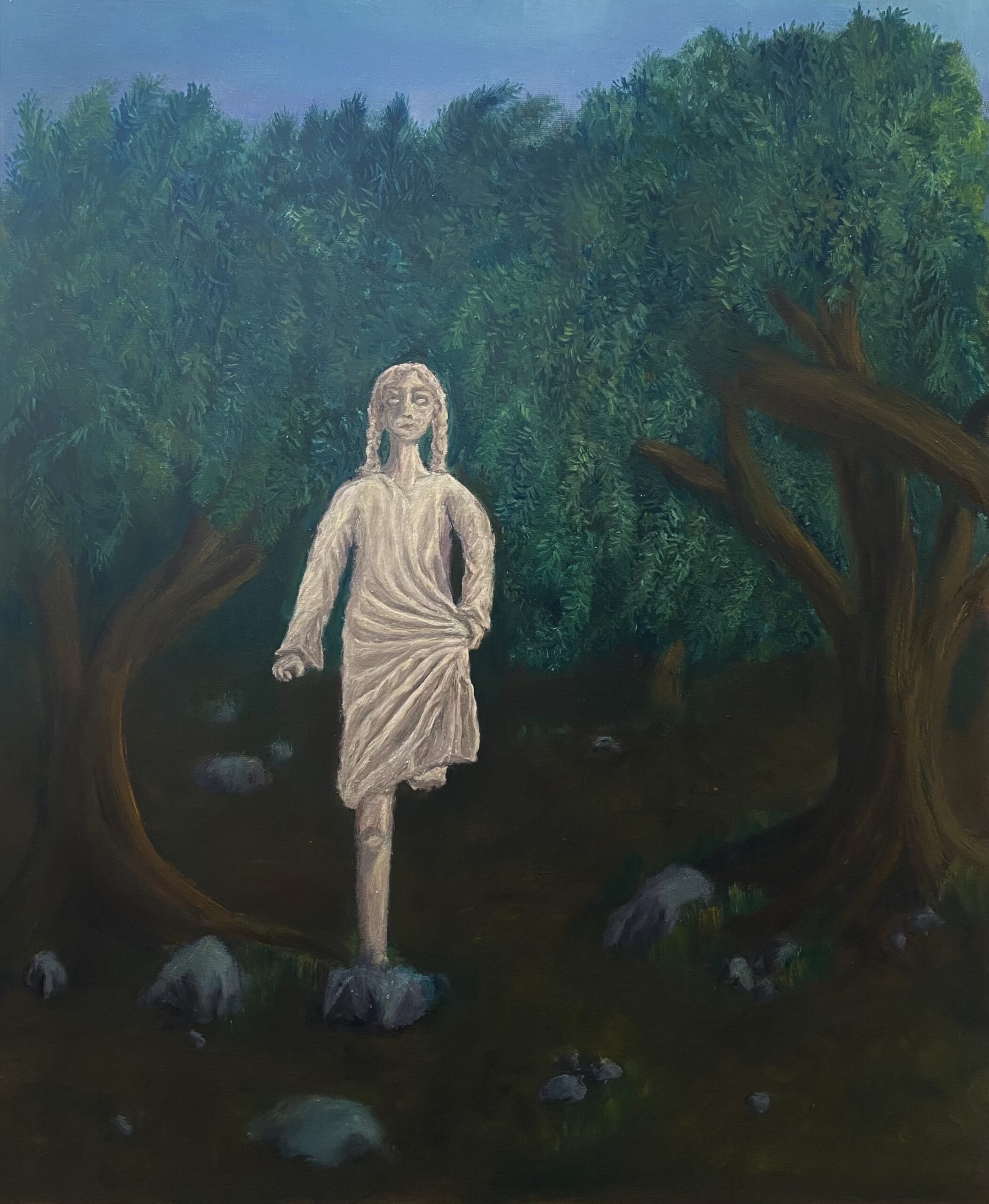
My paintings also make space for important conversations like the representation of people with disabilities. Leave perfection to God is a reminder that we are all responsible for refusing illusions of “bodily imperfections” or “incompleteness.”
Dispelling any outdated perspectives about disabilities is especially important now …
Dispelling any outdated perspectives about disabilities is especially important now, as other countries receive children from Gaza for medical treatment or rehabilitation after difficult amputations. Accommodating those with physical (or other) disabilities can often be seen as an afterthought (made publicly visible through the lack of proper curb cuts, ramps, adapted public transport, etc.), because those with disabilities are considered “special cases” or “rarities.” Normalizing the representation of people with disabilities in artwork is only one small step in shifting cultural perspectives towards seeing disability as an integral part of being human.
In moments of isolation and disempowerment, I have felt lucky to have been able to see the presence of birds and trees as witnesses to situations where I was disempowered. Because being aware of any surrounding living beings (and their ability to “watch over” me) brings me comfort in these situations, I wanted to represent their existence as an optical inversion. In the painting’s perspective, those in power (or those abusing it) must succumb to the same laws and forces of nature that all of us are familiar with.
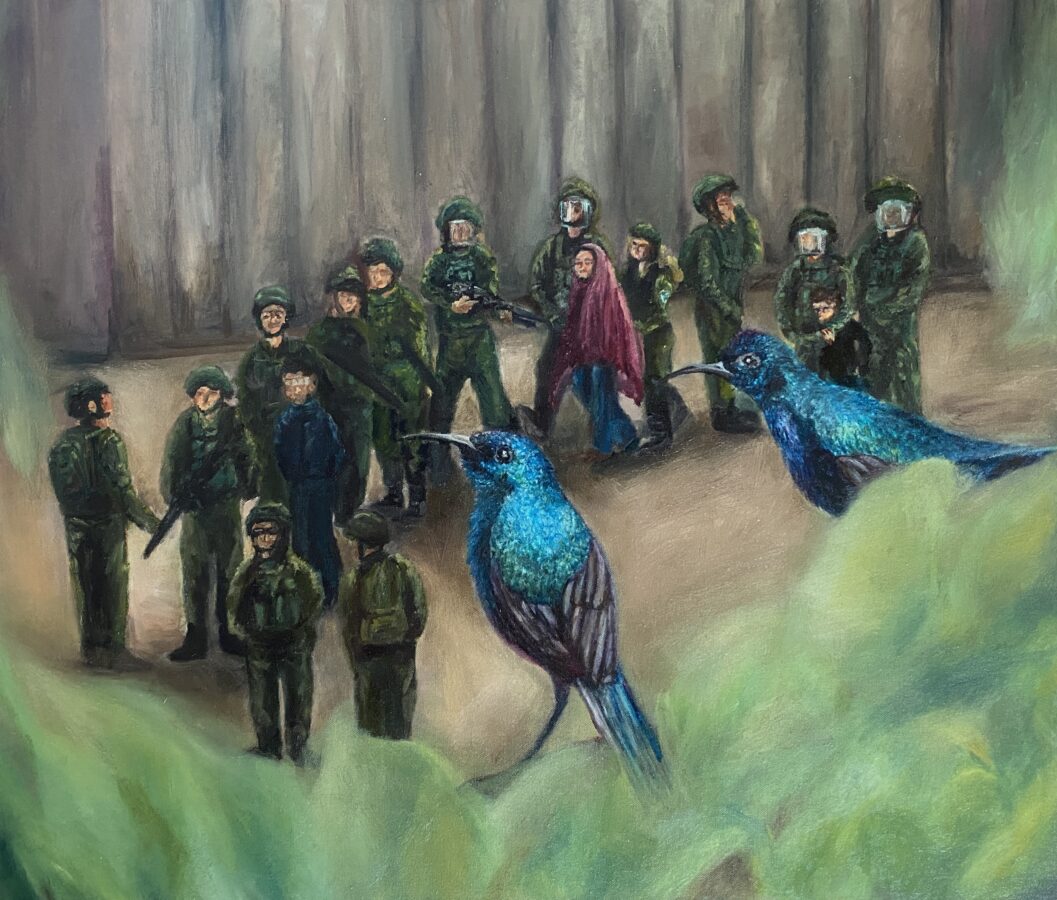
The sunbird is a symbol of Palestinian resilience.
The continued illegal attacks on so-called “Middle Eastern”** countries by the US and Israel under the guise of “saving women” (while Israel Occupation Forces soldiers torture women in unspeakable ways) or “liberation” (as they render our land uninhabitable) make the title of the next painting especially ironic, given how the saying Is it a bird or a plane? was once popularized by the “Superman” franchise.
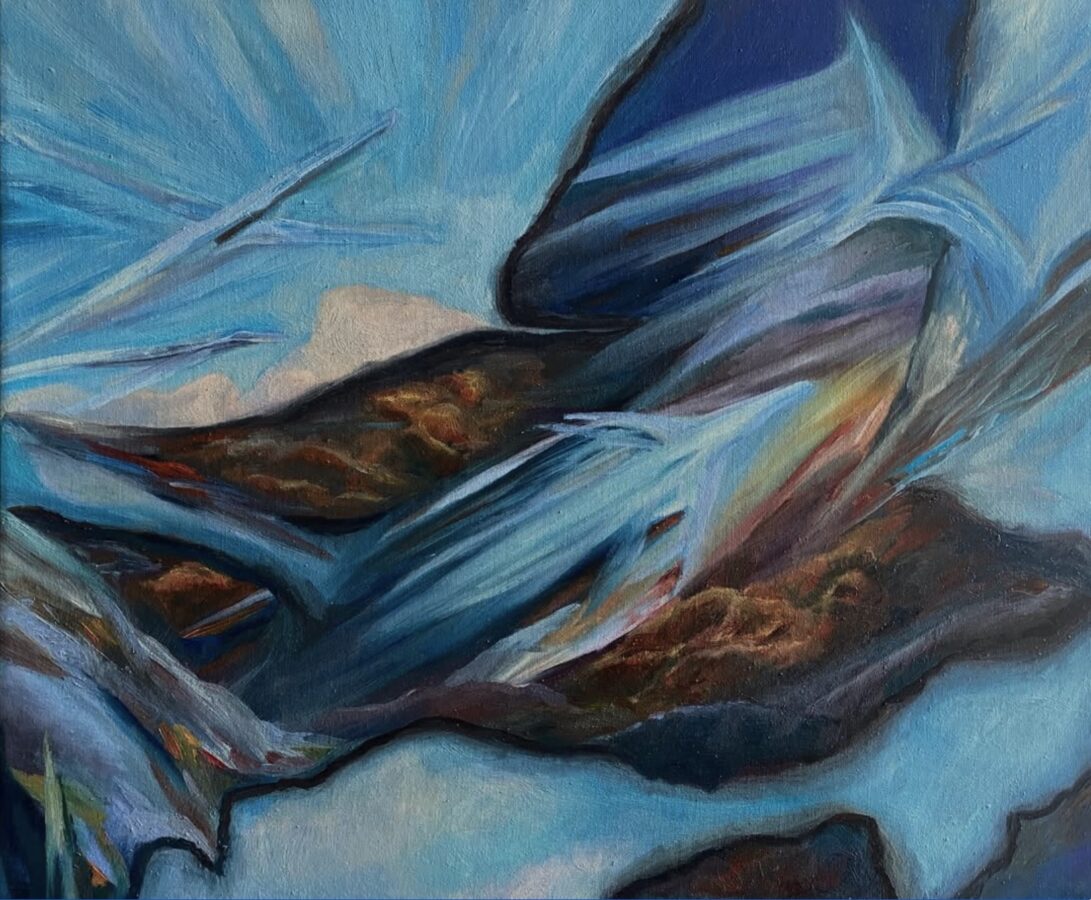
Unfortunately, this question is now a frequently repeated observation, or maybe even a continuously running background thought for many citizens in the region—especially children—as hypervigilance becomes the standard way of being.
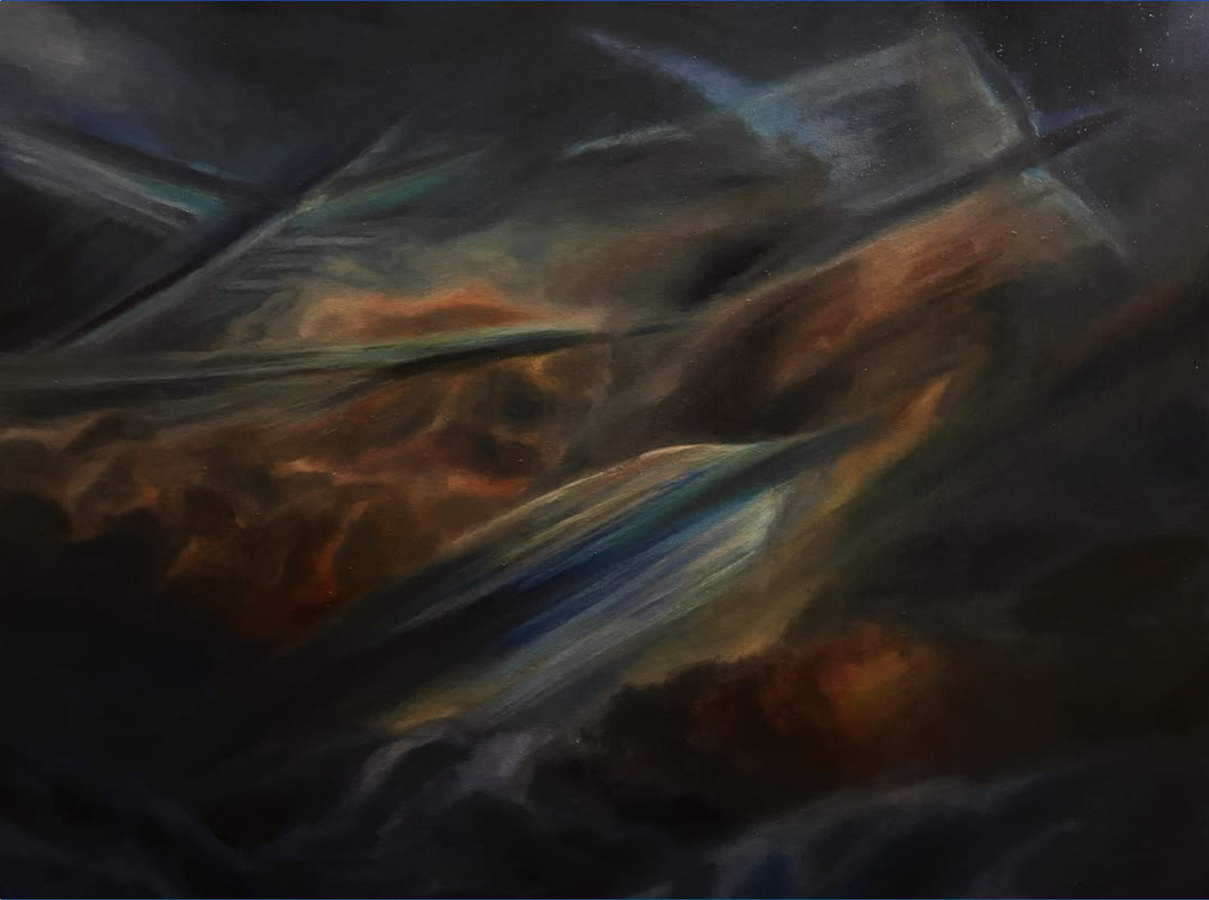
The second layer was painted from the perspective of viewing air strikes on Gaza from an airplane, in an attempt to process the shock of flying over a site of ongoing violence and seeing how (shamefully) normalized that violence has become.
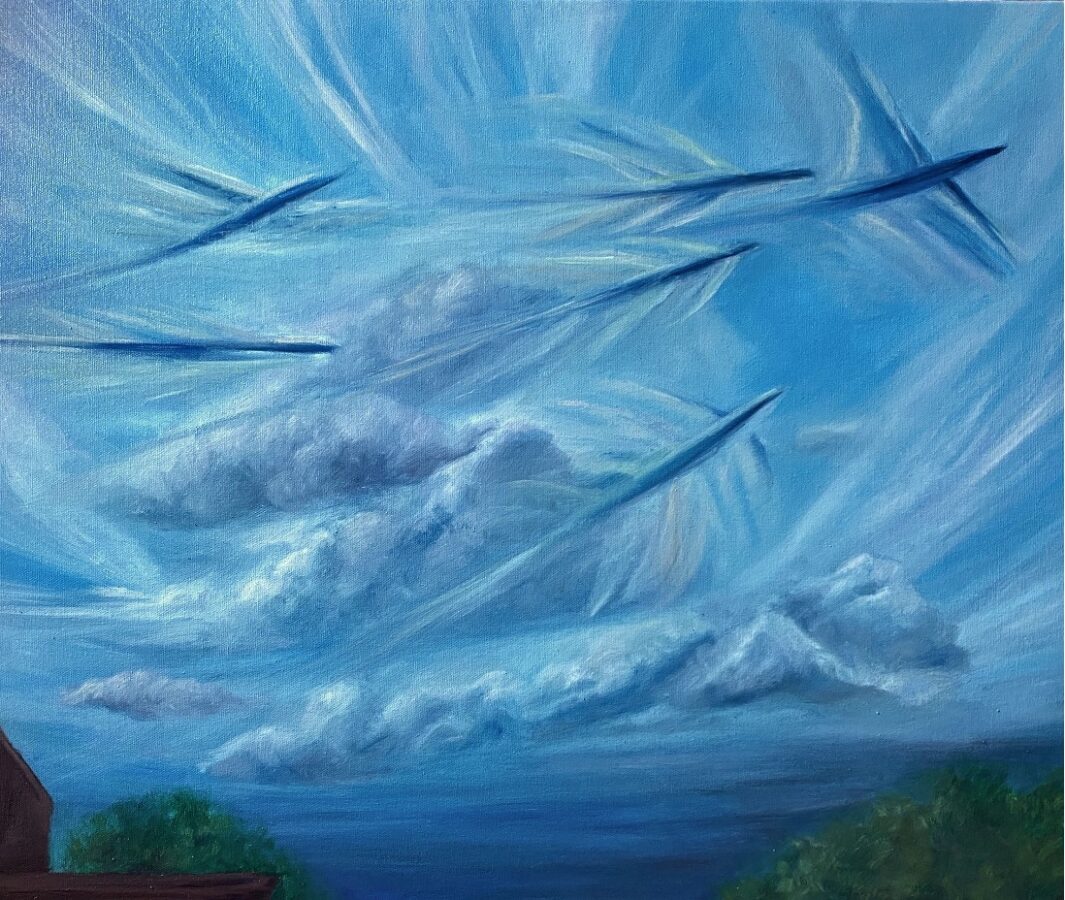
This first layer focuses on the hypervigilance and unease that has become the norm for people living in Palestine and other Arab countries bordering the Israeli occupation. Even for those physically unharmed by the violence, the feeling of needing to watch the sky remains long after the missiles or drones pass overhead.
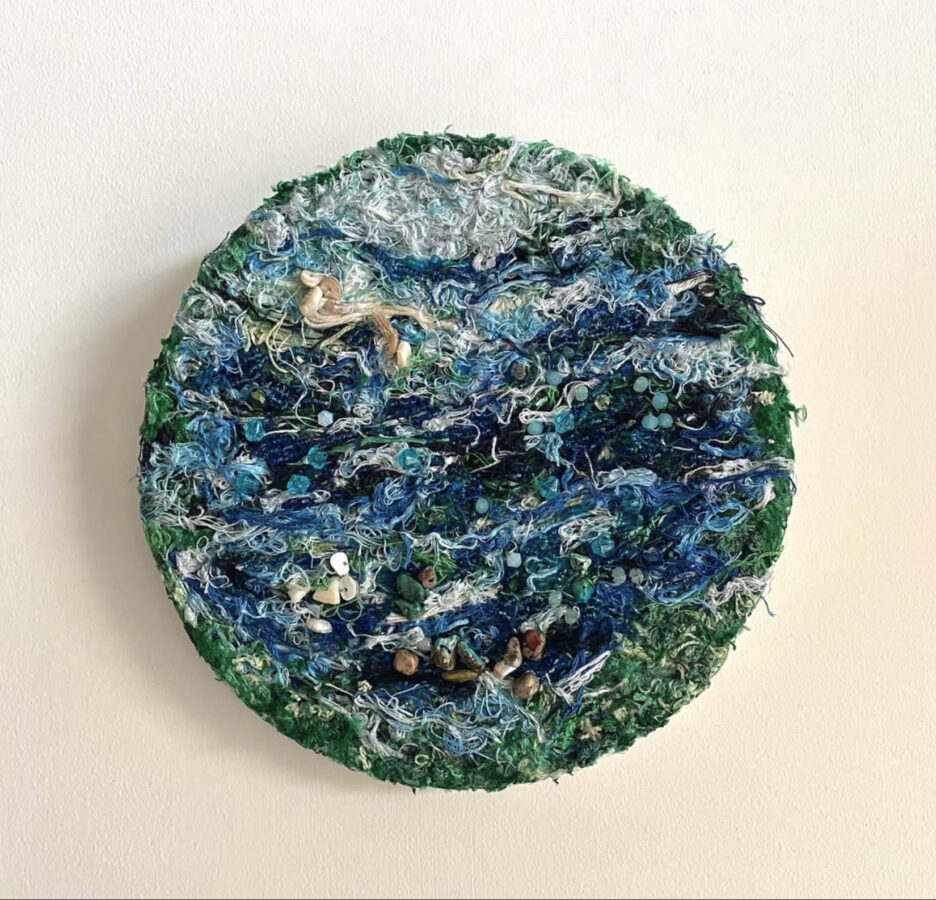
Access to clean water is something that is often taken for granted in the world, while those living in occupied territories and in Gaza in particular often have their water sources contaminated by the occupation, leading to the spread of illness.
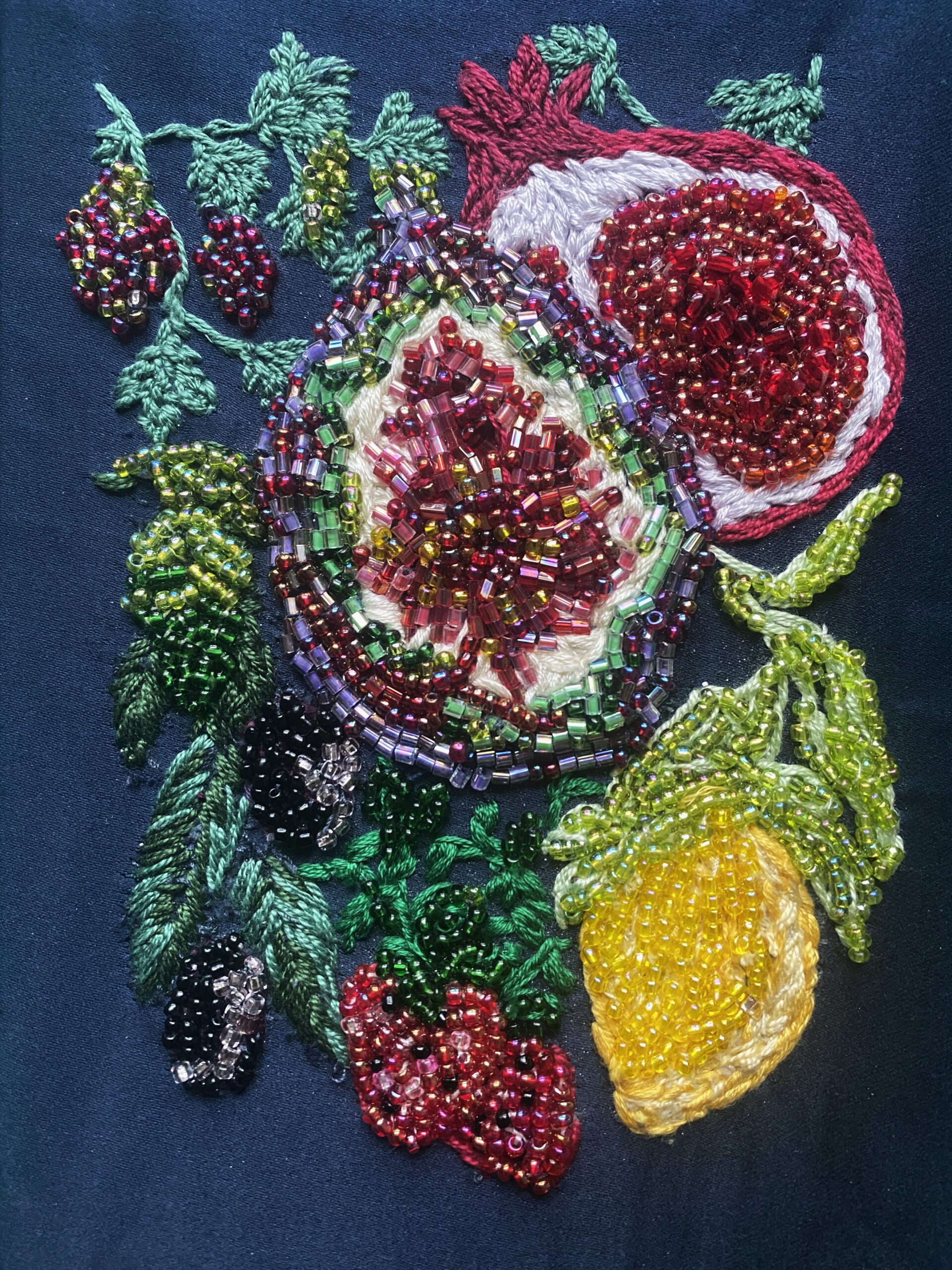
People in Gaza have struggled to find fresh produce over the past year, making this a labour of gratitude for something that can often be taken for granted. This beadwork was completed over two months using recycled beads and unused threads from previous projects.
Notes
*The first painting, Portrait of a Family in Gaza, was displayed digitally as part of the Qattan Foundation’s exhibition in Ramallah (@qattanfoundation, starting March 9, 2024) to document the ongoing horrors in Gaza.
**Calling these countries “Middle Eastern”—that is, “to the east” of European and US territories, but not the “Far East”—is based on an orientalist concept that centers colonial territories and their interests.