Attentiveness to traces
The significance of Ihtiyar’s photographs presented here resides not solely in their subjects but in the manner in which documentary evidence is transformed into visual reflection, allowing photography to function simultaneously as witness, metaphor and meditation.
At the centre of Ihtiyar’s practice lies an attentiveness to traces. Throughout his work, objects, interiors, landscapes and faces become repositories of lived experience. Memory rarely appears as an explicit narrative. Instead, it manifests through material surfaces, architectural remnants, gestures and environmental forms. The photographs repeatedly suggest that history survives not only within individuals but also within the spaces and objects that remain after them.

Ihtiyar’s concern for the relationship of people with objects, place and memory is immediately evident in Anatolia Cradle. A modest interior dominated by a deep blue wall is interrupted by a narrow shaft of light. Suspended within this luminous field, the cradle appears at once ordinary and symbolic. Documentary description gives way to metaphor. The room becomes a space of origin, continuity and remembrance. Through careful control of light and composition, a household object acquires the weight of cultural memory.

A similar transformation occurs in Nothing but Infinity. An earthen façade punctuated by two windows becomes a meditation on absence and perception. Through the openings, fragments of distant landscape appear suspended between interior and exterior worlds. The image rooted in observation resists straightforward interpretation, suggesting separation, longing and the unstable boundaries between remembered and imagined space.
This interplay, oscillating between concrete imaginaries and historical record, becomes especially visible in the portraits.

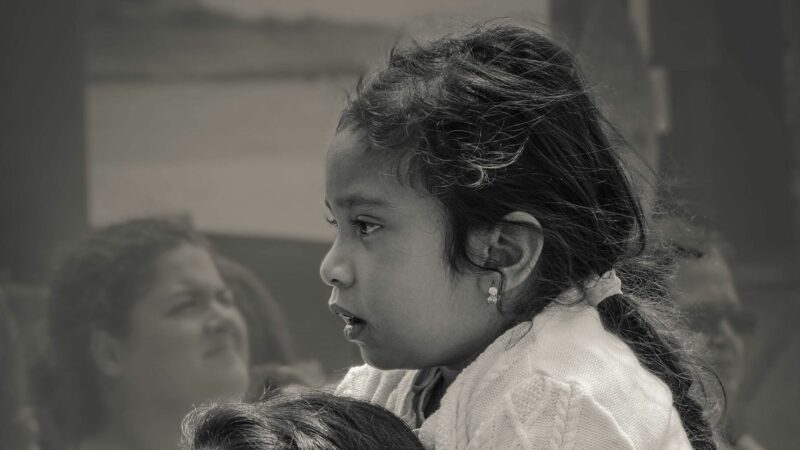
The series Through Faded Souls offers some of the most compelling portraits in Ali Ihtiyar’s work. Elderly sitters like the woman here confront the camera with remarkable directness. These portraits are not concerned primarily with biography. Individual narratives remain largely unstated. Meaning emerges through expression, posture, texture and gaze. The subjects appear as witnesses whose physical presence bears traces of larger historical realities and speaks to broader questions of aging, endurance and cultural continuity.

Musa Anter Press Martyrs Awards, Photography Awards, Özgür Gündem, 2002
In Nomad Life, human habitation is situated within the expansive geography of the Munzur Mountains in northeast Turkey. The modest but visually central tent is both shelter and symbol. Against the monumental landscape, it evokes forms of existence shaped by movement, adaptation and resilience. The photograph avoids ethnographic distance and establishes a dialogue between human vulnerability and environmental impermanence, punctuated by precarity.

This dialogue is most explicitly political in Country and Freedom, a series from Lesbos documenting the Syrian refugee crisis. Resisting the conventions of crisis imagery, these photographs examine the psychological dimensions of displacement.
The sea stands simultaneously as passage and barrier, possibility and threat. Human figures appear suspended between departure and arrival, homeland and destination, certainty and uncertainty. Ihtiyar maintains a profound respect for the individuals depicted, refusing sensationalism in favour of dignity and introspection.
The photographs neither aestheticize suffering nor reduce their subjects to visual evidence. They construct encounters grounded in empathy and attentiveness.

A significant shift occurs with Ali Ihtiyar’s more recent Montréal photographs, where the emphasis moves away from social documentary toward questions of perception, atmosphere and visual transformation.
In Front of the Red Wall derives much of its force from chromatic tension. Against the subdued tones of winter, a saturated red surface emerges as a field of visual intensity. Falling snow softens contours and interrupts clarity, creating a dynamic relationship between permanence and transience.

Huawei XMAGE awards Best in Category, 2023 China
International Photography Awards, honourable mention and jury top 5 selection, 2020 USA
This fluidity reaches a remarkable culmination in Enchanting Flow. Reflections, moisture and movement dissolve architectural form into fluid configurations of colour and light. The city becomes unstable, transformed into a shifting environment where distinctions between photography and painting begin to collapse. Surface replaces structure.
Ihtiyar’s camera no longer serves solely as an instrument of observation but becomes a tool for investigating the conditions of the act of seeing itself.

Ihtiyar’s later landscape works extend this investigation of visual perception through the natural world. In A Moment Before Disappearance and Whispers of the Wind, trees become the principal subjects. Their fractured branches, weathered surfaces and dramatic silhouettes operate as visual analogues for endurance, vulnerability and transformation.

XMAGE 100, Huawei XMAGE Awards 2025
Rendered through dramatic atmospheric conditions and striking tonal contrasts, these arboreal forms acquire an almost human presence, as witnesses to time itself. Wind, weather and seasonal change become active participants, emphasizing impermanence and continual renewal.
These photographs complete a trajectory visible throughout Ihtiyar’s work. What begins as documentary observation gradually evolves into visual contemplation. Objects become mnemonic traces. Portraits become meditations on history and survival. Landscapes become psychological spaces. Urban scenes become investigations of perception.
Yet documentary truth never entirely disappears. It remains embedded within the photographs as an ethical foundation. The images continue to emerge from attentive encounters with actual people, places and histories. Their poetic dimension does not replace reality, but deepens engagement with the world as it is, illuminating facets of human experience that remain beyond immediate visibility.