Musical growth comes from openness, exploring new styles, new cultures and new collaborations. – Lamia Yared
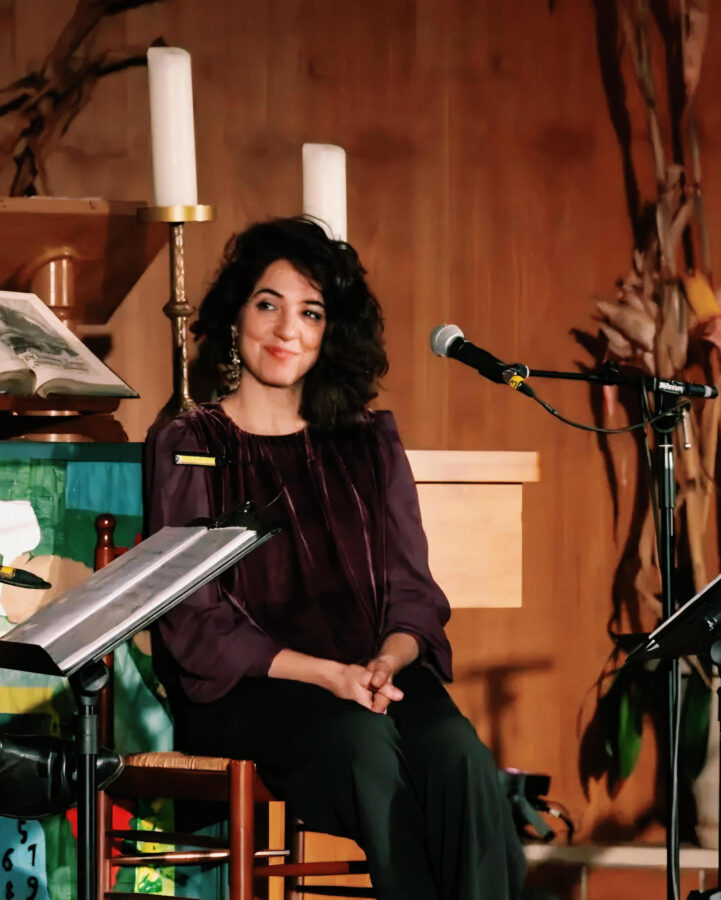
Standing at a cultural junction, Lamia Yared is a Canadian singer and oud player of Lebanese heritage whose work bridges the musical traditions of the Eastern Mediterranean and neighbouring regions.
She is specialized in Arabic and Turkish-Ottoman repertoires, grounding her artistry in Maqam melodic modes, while remaining open to intercultural exchange. In 2014, she founded Ensemble Zaman to revive rare Levantine traditions. Ensemble Zaman’s repertoire encompasses musical dialects ranging from classical Turkish Sanat Müziği to the classical Arabic muwashahat.
Yared’s debut album, Chants des Trois Cours (2019), explored Persian, Ottoman, and Arabic courtly music, followed by Ottoman Splendours (2022). Her latest release, From Minho to Euphrates (2025), created with Efrén López, connects Iberian and Middle Eastern repertoires. In addition to recording, Yared leads cross-cultural collaborations uniting artists and traditions from Byzantium to Al-Andalus and shares her expertise through mentorship and international partnerships, affirming her role as both performer and cultural mediator.
She has been invited to present her projects through collaborations with ensembles such as Takht Attourath (France), Ensemble Scholastica (Québec), Labyrinth Ensemble (Ontario), La Cigale (Québec), and the Studio de Musique Ancienne de Montréal.
In this slightly edited interview, we explore how Lamia Yared’s latest projects trace a musical geography revealing more than a millennium of artistic exchange… a testament to the enduring dialogue between cultures that continues to shape her work today.
DH: Could you tell us about your earliest memories of music, the environment you grew up in, the influences that shaped you? Was there a turning point when your passion for music became an artistic path?
LY: That’s a good question. We don’t always stop to reflect on these things, so I appreciate it.
I grew up in a kind, religious atmosphere where my Christian father would go often to church, so I listened a lot to the Taratil, the hymns sung during services in the church where I used to go. Those sounds left a deep imprint on me in my early childhood, before the age of six, when we moved to Canada where the environment was much different. That early musical atmosphere stayed with me, and it shaped something in me.
DH: Montréal is known for its vibrant yet highly competitive music scene. When you first entered the music world here, what were the main challenges you faced?
LY: Sometimes you’re trying to build projects with people you don’t know yet, and sometimes it’s not the best combination. You must know where you feel comfortable, because there are lots of very talented musicians.
Another challenge is that sometimes we don’t see beyond the boundaries of the local scene, but there are so many things going on elsewhere where you learn so much. When you do lots of collaborations outside the city, beyond Canada even, you start to understand your own artistic contribution differently. You learn more, you grow more, and you see where your music fits in a broader landscape.
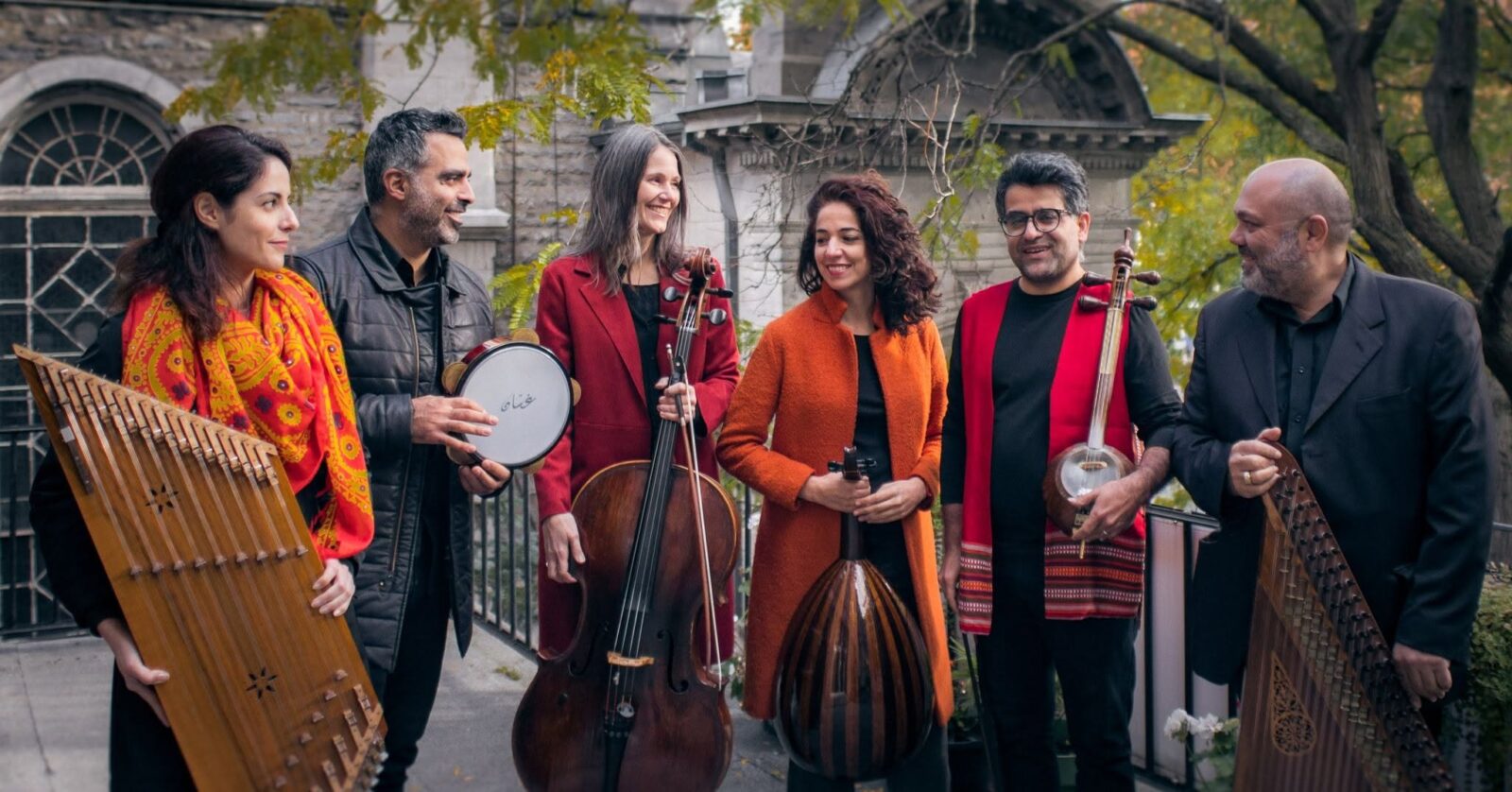
DH: So, your work builds up over time. Step by step you develop relationships, not only in Montréal.
LY: Exactly. You must keep looking toward a wider horizon and not stay confined to one city or one repertoire. Musical growth comes from openness, exploring new styles, new cultures, new collaborations. That’s how you evolve.
DH: In The Temptation to Exist, Emile Cioran asks: “What can we say of the musician’s prospects in a world where every combination of sounds has been imagined?” Where does your conviction stem from, that reviving and engaging with heritage are a crucial necessity?
LY: It comes from many sources and many traditions. Cioran is right, everything has been done, in a sense. We need to compose with the actual [current realities], to work with people from different backgrounds while staying rooted in the aesthetics of traditional music.
I collaborate with artists from different backgrounds who share this sensibility, composing new works but within an aesthetic that honours the lineage we come from. There are contemporary musical trends that simply don’t resonate with me, and I don’t feel obliged to fit into them. Instead, I’ve been working with composers from Kurdish-Iranian and Spanish traditions, and through these encounters we’ve created new concepts, new shapes, new forms, spaces where we can improvise and build something fresh without abandoning the heritage that grounds us.
DH: In a Canadian study titled “Interface Between Sociolinguistics and Music,” the researchers argue that a singer’s linguistic choice goes beyond the mere formal requirements of rhyme and meter, as it stages identity and signals belonging or resistance. To what extent do your artistic choices reflect this?
LY: I appreciate this question very much. Resistance, for me, begins with refusing to create something merely because it fits the expectations of contemporary art.
My way of resisting is to express where I come from musically, speaking from the Mashrek [region], using elements of our heritage as part of it, even when some listeners might find it “too heavy” or unfamiliar. Part of our role is to educate the public.
Art isn’t only entertainment. It’s also integration, conviction and the desire to share what you truly love.
My resistance is to present the music of the Mashrek, its poetry and its form, even if it’s a difficult genre and demanding. I teach it, I interpret it, I perform it, because it carries a world that deserves to be heard.
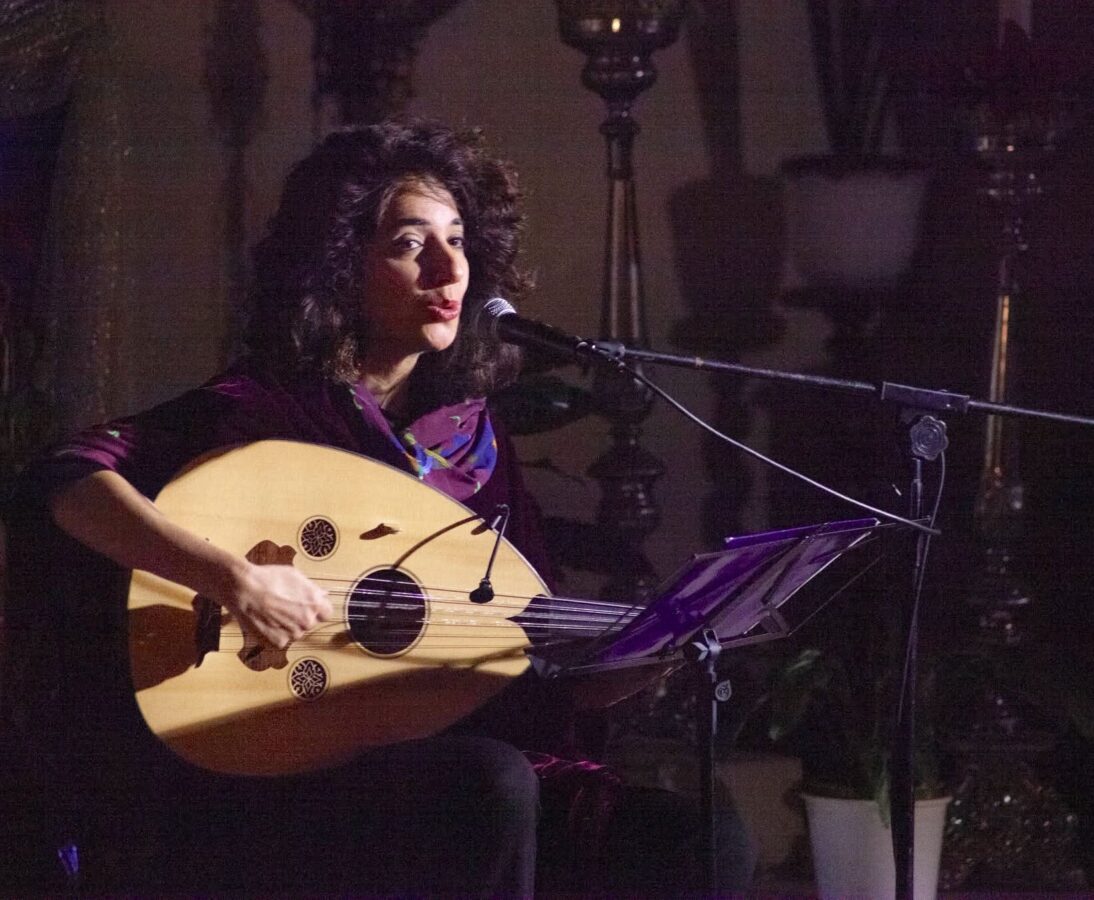
DH: You mentioned teaching, are you also a music teacher?
LY: Yes, I teach in several places, and I’ll be teaching again this summer. My focus is the repertoire of the muwashahat, a particular genre from the Mashrek, the Syrian and Levantine tradition. It’s a demanding kind of repertoire in terms of poetry, rhythm and the use of microtonality. I teach it mostly in private settings, though less so this year because I’m very busy with new projects. But teaching remains an important part of my work.
DH: Does this music attract learners from outside the Arab world?
LY: Yes, very much so. I have some wonderful students who approach this tradition with real curiosity and dedication. Our language is very demanding, even for me. Sometimes the words are very difficult to understand. But many of my students are expatriates or first-generation immigrants from the Arab world who need to reconnect with their roots, as I do, in a way.
DH: In an interview with Frédéric Cardin, you mentioned that your latest album, From Minho to Euphrates, spans 1,500 years of Arab musical heritage. Have you ever felt pressure to adapt your work or artistic identity to better fit the contemporary local music industry?
LY: Yes, I have felt that pressure at times. I’m not the most mainstream artist, and I’m not trying to be. I’m interested in creating this music with people who reverberate the same way as I do in this musical genre.
DH: Last year, you performed the concert “Ballate” with Italian artists Sorini and Peppe Frana alongside Ensemble Scholastica in Montréal, and you are preparing for similar concerts. Is this bringing together of languages through music a form of deliberate or “guided” linguistic choice, as some scholars describe it? What drives these choices?
LY: This project is linked to the release of an album I created with my colleague Efrén López [From Minho to Euphrates]. It grew out of a very close collaboration in which we defined a shared musical language.
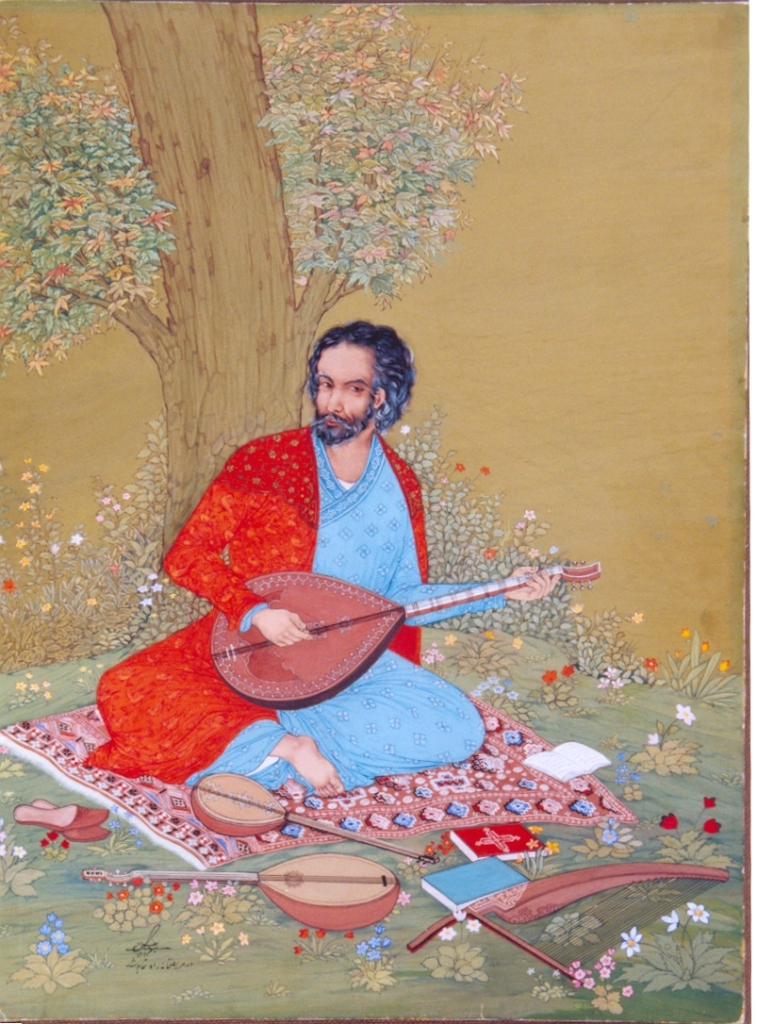
We “maqamized” the repertoire, meaning we introduced maqam structures, microtonality and modal thinking into the Cantigas de Santa Maria, a particular Christian repertoire from Iberia in the 13th century. We used different melodic sets and scales drawing from Sharqi microtonality, and integrated them into these medieval pieces.
The program also includes works from a manuscript of the same era from the Euphrates region, composed by the great music theorist Safi al-Din al-Urmawi. By placing these repertoires side by side, we wanted to create a kind of timeline that reveals how these traditions, though separated by geography, religion, and historical “walls,” coexisted at that moment. [Our] interest today is to reunite with them and see how they could blend together.
DH: So, the message behind your projects is unity, bringing things together?
LY: Not unity, exactly. I would say connectivity, [allowing] some walls that were there [but] are no longer there to manifest.
These are very different musical styles, but we are interpreting them in the same concert and in the same timeline. We want to show, narratively, how around the 12th and 13th centuries all this music used to coexist, but nobody was aware that it was coexisting at the time.
DH: Do musical, linguistic, or cultural challenges arise in these collaborations?
LY: Not in this case. It was actually a pleasure.
The challenge, maybe, is that we didn’t meet enough to really work on these on a daily basis. We met briefly to rehearse, for four days, but since Efrén López is such a talented musician, he doesn’t need to rehearse much.
DH: In a previous interview I conducted with Lebanese composer Hiba Al Kawas, she said: “The West is a world that constantly seeks something new and searches for a new musical voice, and perhaps because our music is different, they [have] responded to it remarkably.” How have Canadian or Western musicians who are not of Arab origin responded to your work?
LY: Well, what I do isn’t strictly “Arabic” in the traditional sense. It’s a blend of many influences…
I’m a product of where I come from and of the environment in which I grew up, so I have a little of both. My audience is mostly Canadian, Québécois and Montrealers, who like very much what I do and the concerts I give.
DH: Audiences emotionally engage with music even when they don’t understand all the languages used in singing. Based on your experience, what impact does this musical blending of multiple languages on a single stage have on audiences?
LY: It’s a way to make them connect beyond language, to connect with the music itself, the melody, the expression…
And if I sing in Galician, for example, some people will recognize elements of Spanish or Portuguese within it, so they become very curious. At the same time, they understand that it is a very old language, which fascinates them. People are drawn to kind of decoding the language as part of what I present.
DH: What future projects are you considering? Is there a broader goal that you’re ultimately striving toward?
LY: I am launching this album, From Minho to Euphrates. I also have a project in France, hopefully next year — a kind of residency with an Iranian musician living there. I’m really looking forward to that, because I would like to go even further, back to the 10th century, exploring melodies that connect the Arab world and the Iranian/Persian world. So, this is the next venture, and I’m excited about it.
The broader goal is that I would like to explore more the European side. This is my goal for next year: to do more concerts, more tours there. We’ll see.
DH: Before we wrap up, I’d like to ask you about Lebanon. What place does it hold in your life now?
LY: My Lebanese origin… Oh my God, indeed. It feels so far from what’s happening at the moment, actually. It’s a bit discouraging and painful even to open the subject. Of course, I miss my roots. I miss my country deeply.
DH: Do you think music can serve as a kind of healing for the pain in Lebanon or Palestine, or elsewhere? Can music still have an impact in this world?
LY: Absolutely. I recently met with a Palestinian poet, and I hope to invite him to Canada so we can collaborate. I think we need to comfort one another within our communities and bring our arts together. It helps us feel less alone.
… we need to comfort one another within our communities and bring our arts together. It helps us feel less alone. – Lamia Yared