The radiator hissed. The pipes yelled back. Nusrat lay still, counting the breaths between each clank as if they were her morning alarm. Dawn crept in under the blind, the colour of muddied dishwater, and the scratching in the wall persisted as it had throughout the night.
“Bas,” she told the plaster. Enough.
Her feet found the stitched rip in her grey slippers. The linoleum was tacky from last night’s spray, poison sweetness clung to the curtains and her hair. Four months after Aslam died, she had woken up to phantom shuffling in the kitchen, convinced he was filling the kettle. Now the sound there was only the industrious patience of cockroaches. Somewhere in Toronto, her son sent her thumbs-up emojis in response to the “easy cooking” reels she shared. She smiled at each one, proud he had built a life that didn’t need her worry. Good for him, she thought. He deserved that.
She cupped water to her face, washing with the neem oil face scrub from the South Asian dépanneur. In the mirror, her cheeks hung solemnly, like fruit left too long on the counter. She looked out the window, and a blanket of snow appeared. “Buzdil,” she would tease Aslam when the first snow came — coward. Winter took him anyway; one clean bite on the sidewalk, a sharpness in the chest, his hand clutched over his heart, and a surprised ah. Two years later, the ah still rang in the pipes.
“Buzdil,” she would tease Aslam when the first snow came — coward.
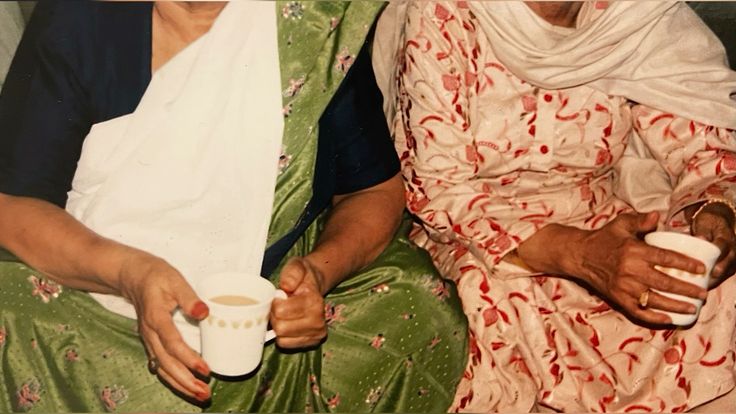
She tied her dupatta, wiped crumbs and mouse droppings out of habit, and put the dented pot on. Milk climbed the pot; cardamom rose. She caught it just before it fled and spilled all over. For a moment the apartment became a small room in Lahore where somebody was laughing, young people were in love, and ghazals flowed in the background.
She scratched her head. Winter always dried out her scalp. After massaging coconut oil into her fraying grey hair, she spread her coins on a paper towel. A loonie for laundry, quarters for the dryer that greedily ate time, and dimes for the bus to Jean Talon. She sighed. It was embarrassing to be the one to throw so many into the little coin eater on the bus every time.
On the counter lay the envelope from social assistance: NOTICE OF ELIGIBILITY REVIEW. She had circled the date until the ink bled. Thursday; today was Tuesday. She would need printouts, a scan of the cardiologist’s letter, another reminder that dead men did not return to shovel snow no matter how politely she asked for heat. No matter how many tears or layers of grief. Nothing could bring them back.
A roach crossed the envelope. She brought the cup down with a tidy bang. “Khuda maaf kare,” she muttered. God forbid. She wiped the rim and kept drinking, trying not to think about it.
At nine, buzzers chimed downstairs. A pamphlet slid under her door: TENANT RIGHTS — INFESTATION? YOU ARE NOT ALONE. She stuck it to the fridge with a magnet from a trip to Québec City she and Aslam had gone on when they first immigrated. It fell. She put it back. Something inside her began to wake. A rage that had been silenced for too long.
Something inside her began to wake. A rage that had been silenced for too long.
By ten, she had gathered laundry into Aslam’s old gym bag, the one that smelled like winter and a man who owned two colognes he rarely used. On the landing the third stair sagged, dipping where trust was most enthusiastic. She would curse the stairs each time she descended, calling them dogs in Urdu. Outside, Parc-Ex held its rough ballet: crates thumped, girls held hands in mittens, someone cursed the grey sludge on the sidewalk that ate his boot. The halal butcher lifted a hand. She lifted her chin in return, remembering how her mother had once called her khoobsurat and meant it.
At the end of the block a young man fought tape and cold at a lamppost. Brown like her, young and a little unsure, a housing lanyard at his chest. He turned, saw her, and smiled.
“Bonjour, madame. Vous parlez français? Or English? Urdu?”
“English is okay,” she said, already sorry to be seen, unsure what this young man could want from an old woman with a dupatta wrapped around her head.
He held out the same orange pamphlet. “Meeting about building problems. Infestation, heat. We can help file a complaint.” He pointed to a church she passed daily but never entered. “There’s tea.”
“Tea” felt like a hand at her back, guiding her forward. Nusrat could always be coaxed by a good cup of chai. She folded the paper as if it were an invoice she regretted.
“My name is Nico.”
“Nusrat,” she replied. The scratch-scratch in her head paused.
Nico knocked the next week — two short, one long.
Nico knocked the next week — two short, one long. She skipped the meeting. The idea of strangers discussing roaches while she nodded felt unbearable. But his knocks weren’t demanding.
“I brought forms,” he said, clipboard raised like an offering. He took off his boots without being asked. That respect startled her. A smile crept into the corner of her mouth.
“We can file for emergency pest control.” He started writing something down. “The city covers it if the landlord ignores complaints.” He studied the brown constellations near the vent, squinting as he tried to get a better look inside. “How long’s it been?”
She had almost said since Aslam died. Instead: “A while.”
When he left, he pressed a card into her hand: Parc-Ex Housing Collective. “We meet on Thursdays. There’s food, and tea, of course.”
Faces, each a geography of fatigue: a Syrian couple, a Haitian grandmother in her coat, a Punjabi truck driver with both hands around his tea.
Thursday arrived with a layer of sleet. The Saint Roch basement smelled of fresh samosas and orange pekoe leaves. Plastic chairs in a circle. Faces, each a geography of fatigue: a Syrian couple, a Haitian grandmother in her coat, a Punjabi truck driver with both hands around his tea.
“Everyone, this is Nusrat,” Nico said.
They spoke of rents, bugs, and a landlord whose name was a shadow on a lease, a man poorer on paper than his Lexus suggested. A phantom who only appeared as a signature on an eviction notice or a voice crackling through a lawyer’s phone. While Nusrat counted dimes for the bus, he was calculating the profit of neglect. “I spray every night, but they return,” Nusrat said, her voice steady.
“They always return because he only paints over the rot,” someone answered. “He gives the building a new coat of white, but the bones are still hollow. That is why we fight together.”
The clipboard circulated. She wrote Nusrat Aslam in careful Urdu. For the first time since burying him, his name didn’t make her ache.
Afterward, she poured tea into foam cups. Nico stacked chairs.
“You speak Urdu? We want flyers for South Asian tenants. Maybe you could translate?”
“Translate?” The word felt like a window opening.
“So people know their rights,” he said.
“Okay,” she said. “I can try.”
In Urdu, it softened, almost as if it were a pamphlet for collective prayer.
The collective office was modest, its walls layered with posters: Housing Is a Human Right, Justice pour Parc-Ex. Nusrat came with reading glasses wrapped in tissue. She translated sentences about bedbugs, rent increases, and heating violations. If your landlord refuses repairs, you can file a complaint. In Urdu, it softened, almost as if it were a pamphlet for collective prayer.
At home she taped the flyer above the kettle, feeling proud of her work. Nico made sure she was compensated fairly, too. She held her honorarium proudly in her hands, remembering to buy milk.
Sometimes a boy from the mosque would carry the milk upstairs and referred to her as Aunty. She would laugh and tell him, “Leave it by the door, beta, I’ve got it.” It wasn’t fear, just the comfort of doing things herself. When Nico texted meeting today? she’d nod, already tying her dupatta and slipping into her winter boots.
Spring left sooner than it began.
Spring left sooner than it began. Parc-Ex became a rambunctious bazaar. Vendors shouting mango prices in Creole and Urdu, buses exhaling on their way to the metro station, sparrows ecstatic in gutters. Pest-control notices sprouted on every floor of her building. Tenants asked, “Aunty Nusrat, can you read this?” She traced clauses with a blessing finger, the same one she raised during prayer.
They started a Women’s Corner. “You already help everyone,” Nico said.
“I am just old,” she protested.
“Exactly. That’s power, and wisdom.”
Saturdays, the church basement filled: three women, then eight. One Saturday, a woman named Parveen spread her social assistance forms on the table like a hand of bad cards. Nusrat sat beside her, smoothing the pages flat. “Here,” she said, pointing. “Start with your name. The rest follows.”
The room smelled like cardamom and French fries.
A young Pakistani woman named Saira stayed after one meeting, baby chewing her scarf.
“My husband left,” she said. “I don’t know where to go.”
“You’ll stay with me tonight,” Nusrat answered, surprising herself. “There’s space.”
That night the baby slept in Aslam’s old blanket. The apartment felt less like a space of mourning.
“Ammi, I saw your picture on Facebook! You’re famous.”
A small local paper printed a story: Parc-Ex Women Lead Housing Victory. A grainy photo showed Nusrat with a clipboard, pigeons wheeling above the church. She slid the clipping under the Québec City magnet.
Sami called. “Ammi, I saw your picture on Facebook! You’re famous.”
“Bas,” she laughed. “Nothing like that.”
“I’m sorry I didn’t visit,” he said.
“You’re busy,” she answered, and it felt like putting down a coat she had carried all winter.
Summer arrived thick and sudden. The bulletin board read: South Asian Women’s Support Circle: Tea and Solidarity. One day, Nico announced grad school in a different province. Pride braided with loss in her chest, as if she were losing another child, but it was mostly joy that filled her.
“You showed me,” he said, “how surviving is a political act.”
“And tea helps,” she said, and they both laughed.
After he left, she called councillors, reminded landlords of obligations, and spoke at hearings. The mouth that once whispered sorry to cockroaches now held a microphone without hesitation.
Welcome, sister. Chai Starter Pack.
One evening the sunset painted her walls bruise-pink. The kettle shone; she had polished the dents until her reflection no longer flinched. She packed a newcomer kit, filled with paper cups, a jar of sugar, orange pekoe tea bags, sachets of powdered milk, and a note: Welcome, sister. Chai Starter Pack.
Down the treacherous stairs (the third still dipped, by now her body knew), the air smelled of rain on mud and concrete, reminding her of the monsoon in Lahore.
Across the street Saira balanced the baby on her hip. Saira was a regular at Saturday meetings now, the baby asleep in the carrier while she filled out forms.
“I brought you something,” Nusrat called.
“You don’t rest, Aunty,” Saira smiled.
“Rest later,” Nusrat said. “Today we make tea.”
Steam fogged Saira’s cracked window until the city blurred into light. The first cup trembled in her hand; warmth seeped into Nusrat’s palms.
“Thank you,” Saira said.
“We help each other,” Nusrat answered. “That’s all.”
Pigeons cooed from Nusrat’s own balcony across the way. For a moment she heard Aslam among them: Dekho, Nusrat! You have started a revolution.
She laughed; the baby replied with hiccupping giggles. Streetlights flicked on, quiet declarations of persistence and perseverance.
Nusrat looked into her cup. The tea leaves had settled into a map. The city, once a stranger’s mouth, now knew her name. She sipped cardamom, sugar, and something sweeter.
The taste of Life, reheated and poured again.