Dear Durga, Dear Rana,
On May 8th, I watched Bonjour Tristesse, and it has stayed with me ever since. I first wrote a short note, but felt compelled to gather my thoughts more fully, and to share them with Montréal Serai readers, because this felt like the right space for such a reflection.
This letter is for you, Durga, but also for your father, who is no longer with us, but who, I believe, would have felt such immense pride watching this work. This is a film that not only speaks to human feelings, but also to a deep cinematic intelligence, one that honours both lineage and rupture, memory and invention. It is a film made by someone who carries not only her own voice, but the whispers, shadows and lights of many voices before her.
Writing this letter, I found myself having several conversations in my head with you, Rana. Sometimes I feel you are right here with us, laughing, nudging, offering one of your sharp insights. And then I remember, with a kind of ache and comfort, that your presence hasn’t left us. It lives in the way this film breathes, in the choices Durga makes with such instinct and clarity, in the emotional intelligence that echoes through this work: the power of paying close attention. You are not absent. You are simply here differently, threaded through the silence, through shadows and frames that linger a little longer than expected.
Durga, watching Bonjour Tristesse through your lens felt like drifting into a sunlit dream where pleasure and melancholy coexist, each intensifying the other. Every section of the film reads like a meditation – poetic in form, elusive in feeling – steeped in the complexity of relationships too fragile to be named and too powerful to be denied. You have not merely adapted a story (I confess I have not read the book, but now feel drawn to it); you have distilled an atmosphere, an emotional condition, a gaze. What you’ve given us is more than a film. It is a mood, a presence that stays long after the credits roll.
What you’ve given us is more than a film. It is a mood, a presence that stays long after the credits roll.
From the very beginning, the film moves with a suspended grace. The French Riviera – vibrant, sun-drenched – dazzles with surface beauty but quietly harbors emotional tempests. That contrast is not merely aesthetic; it is psychological. The sea, the sky, the glamour – all become settings against which longing, grief and denial are rendered even more acute. The film’s emotional terrain is textured, tender and full of quiet devastation.
At its heart is Cécile, a young woman wrapped in indulgence and insight, yearning and detachment. You do not simply tell her story; you allow her to refract the emotional palette of the film. We never fully enter her, yet we feel her ache intimately, in her silences, in the way the camera gently shadows her without intrusion. Her image is often fractured; through glass, through reflection, through architectural frames, as though her very self is splintering beneath the weight of unarticulated feeling.
Anne, in contrast, is elegance rendered in stillness. She moves within curated spaces, clean lines, order – but it is this very order that becomes her vulnerability. Her undoing, filmed with such restraint, is one of the most devastating arcs I’ve seen in recent cinema. She is held within frames, within expectations, within unspoken codes, her heartbreak residing in their quiet collapse. You allow us to feel her unraveling without spectacle, which makes it all the more human.
Elsa, too, is treated with such careful grace. Her joy is tinged with knowledge. Her laughter contains melancholy. Her presence, sometimes peripheral, sometimes central, destabilizes the film’s moral compass. She is neither foil nor fool. She is alive, aware and momentary. You grant her dignity.
Her presence, sometimes peripheral, sometimes central, destabilizes the film’s moral compass. She is neither foil nor fool.
Raymond, the father – rakish, charming, allergic to depth – is rendered with compassion rather than critique. His breezy presence masks a deep discomfort with consequence, intimacy, maturity. In many ways, he is both mirror and architect of Cécile’s own emotional uncertainty. His fear of emotional weight casts a long shadow across the film. But again, you resist condemnation. You offer observation – delicate, deliberate and revealing.
Even Cyril, whose role is small, becomes luminous. His sincerity exposes something painful in Cécile: her resistance to simple, unguarded love. Her rejection of him is not cruel, but quietly tragic. He offers her tenderness without games, and she, shaped by a world of evasion and performance, cannot accept it. His departure is one of the film’s softest heartbreaks.
What stunned me most – what made the film feel like something I needed to return to, again and again – was your use of framing and composition. Windows recur like refrains – spaces of longing, distance, looking out and being looked at. These frames offer the illusion of openness, but what they underscore is separation. We see, but cannot touch. We are near, but never quite inside. They are emotional thresholds, much like memory itself.
Knots appear – in hair, in clothing, in subtle gestures – tying together the emotional entanglements that define the film. These knots tighten, loosen, unravel. They are not just symbols; they are tactile sensations – the binds we create, the ties we cannot escape.
And then the roads – those winding, golden, low-angle shots that feel like memories unfurling. They do not mark forward motion but instead return us to feeling, to loops of thought, to emotional terrain we cannot resolve. In those moments, the film most resembled memory – blurred, warm, unfinished.
Even the hair in this film becomes its own vocabulary. Tousled, brushed, caught in wind, it speaks desire, rebellion, composure, surrender. Cécile’s fingers in her hair. Anne’s pristine styling. Elsa’s windblown curls. These are gestures that say more than dialogue. You orchestrate them with such grace.
Durga, this is a film made with care – not just technical precision, but emotional care. You have internalized cinema’s language in ways that feel intuitive, embodied and deeply your own. You know, instinctively, that restraint often reveals more than excess. That the held breath, the glance away, the pause – these are the moments where emotion resides.
Watching this, I felt echoes of Ozu’s silences, Bergman’s psychological chiaroscuro. But also, beautifully, I felt the presence of women who have shaped cinema with emotional truth: Chantal Akerman, Claire Denis, Agnès Varda, Jane Campion.
Watching this, I felt echoes of Ozu’s silences, Bergman’s psychological chiaroscuro. But also, beautifully, I felt the presence of women who have shaped cinema with emotional truth: Chantal Akerman, Claire Denis, Agnès Varda, Jane Campion. You belong in their company – not because you imitate, but because you continue something they made possible. You show that cinema can be both gentle and radical. That it can move without spectacle. That it can be tender and bold at once.
Durga, this film is a masterpiece. And I don’t use that word lightly. Not because it shouts, but because it listens. Not because it explains, but because it trusts feeling. It is a Canadian film – and a global one – that marks a new horizon. You have shown that aesthetic beauty, when used with thought and feeling, deepens rather than dilutes emotional truth.
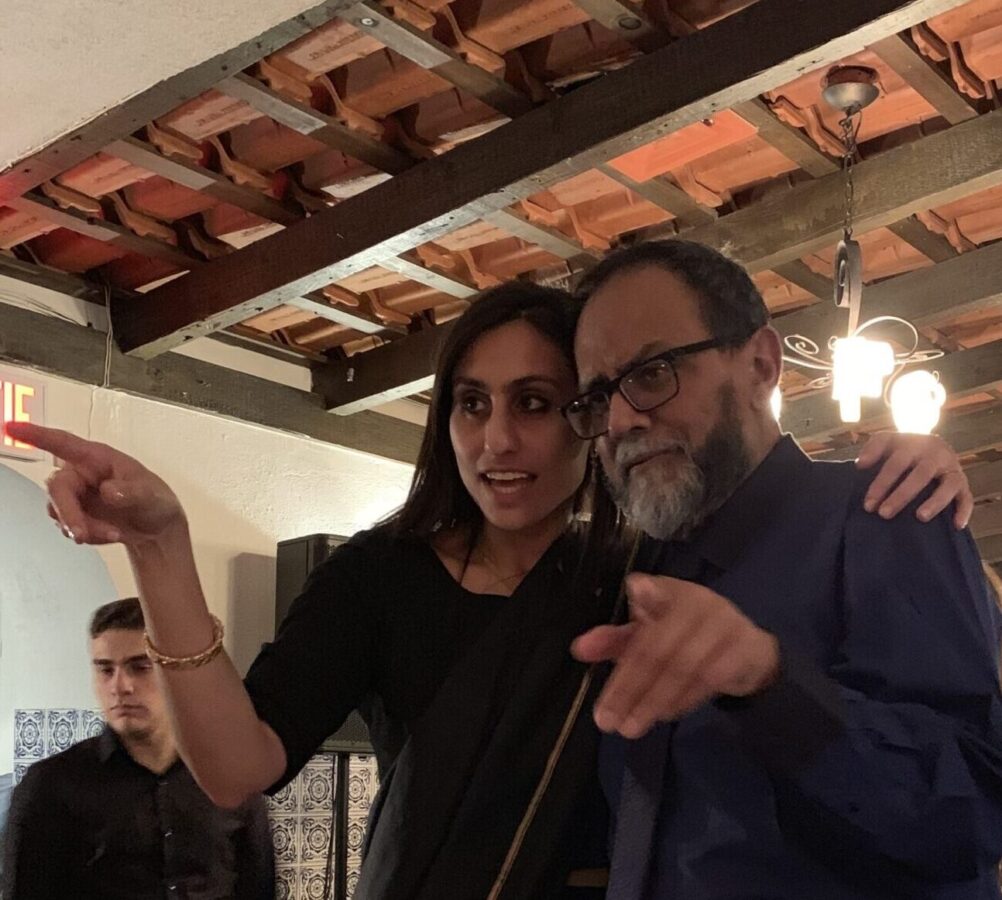
And I can’t help but feel, deeply, that your father would have seen this and felt that something important had happened. That a voice had emerged, fully formed, fiercely intelligent, emotionally attuned. A voice that is both rooted and roaming. A voice shaped by lineage, but entirely its own.
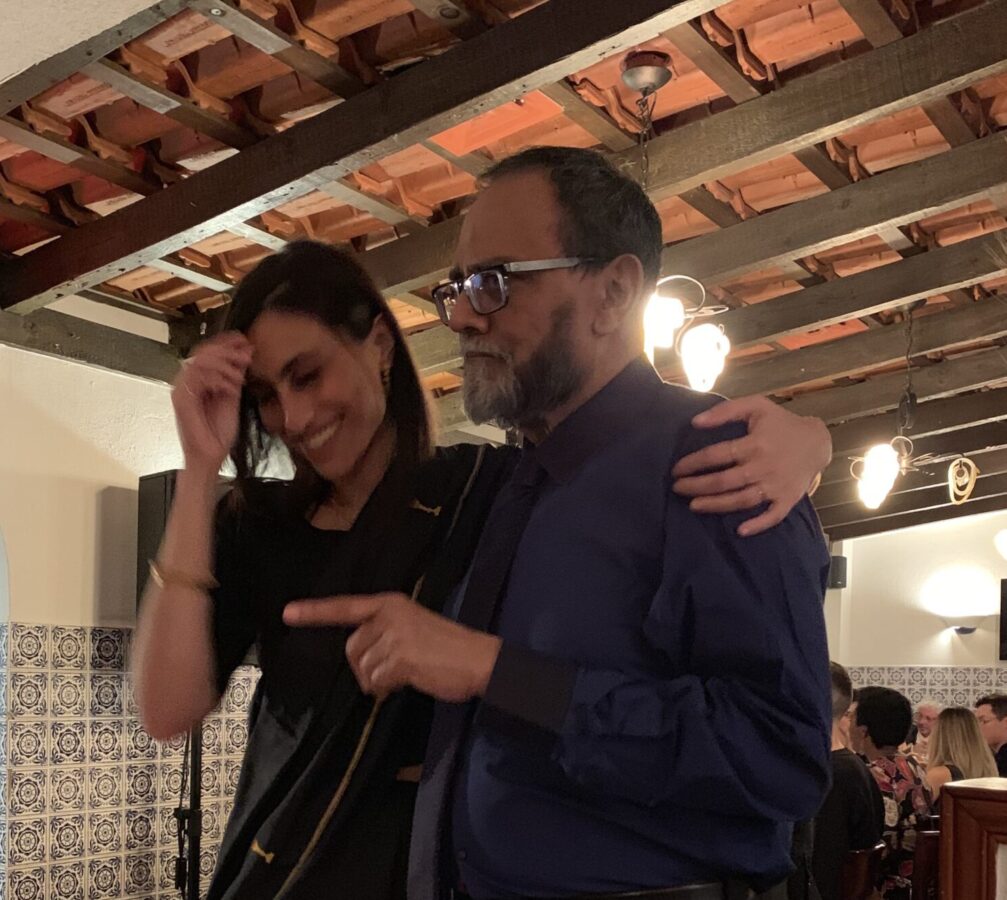
To see your friends and collaborators beside you, steadfast, proud, is to witness something else: that this work comes not only from solitary genius, but from shared strength. From women who have made space for each other. Who have held each other up, and dared to be seen.
I celebrate this work with all who stand with you in love, here and everywhere.
With gratitude and admiration,
Dipti
May 27, 2025